The space is prepared
The place is often arranged with care, sometimes with grass or flowers on the floor. Incense creates a calm, ceremonial atmosphere.
Lango Coffee tells a story of origin, family, hospitality and a ritual that brings people together. This page is an invitation into Ethiopian coffee culture – from Kaffa and the legend of Kaldi to the jebena in the coffee ceremony.
The story of coffee begins in Ethiopia. Kaffa, in the southwest of the country, is widely regarded as one of coffee’s historical birthplaces. Wild and cultivated Arabica coffee plants still grow there in a landscape where coffee is much more than an export crop.
In Ethiopia, coffee is not only found in cafés or shops. It is part of everyday life, language, family culture and hospitality. In a country with more than 80 languages and many regional traditions, coffee is a shared thread: it creates time, closeness and a reason to sit together.
This depth is what we want to bring to Linz with Lango Coffee – not as folklore, but as a respectful connection between Ethiopian origin, careful roasting and modern presentation.
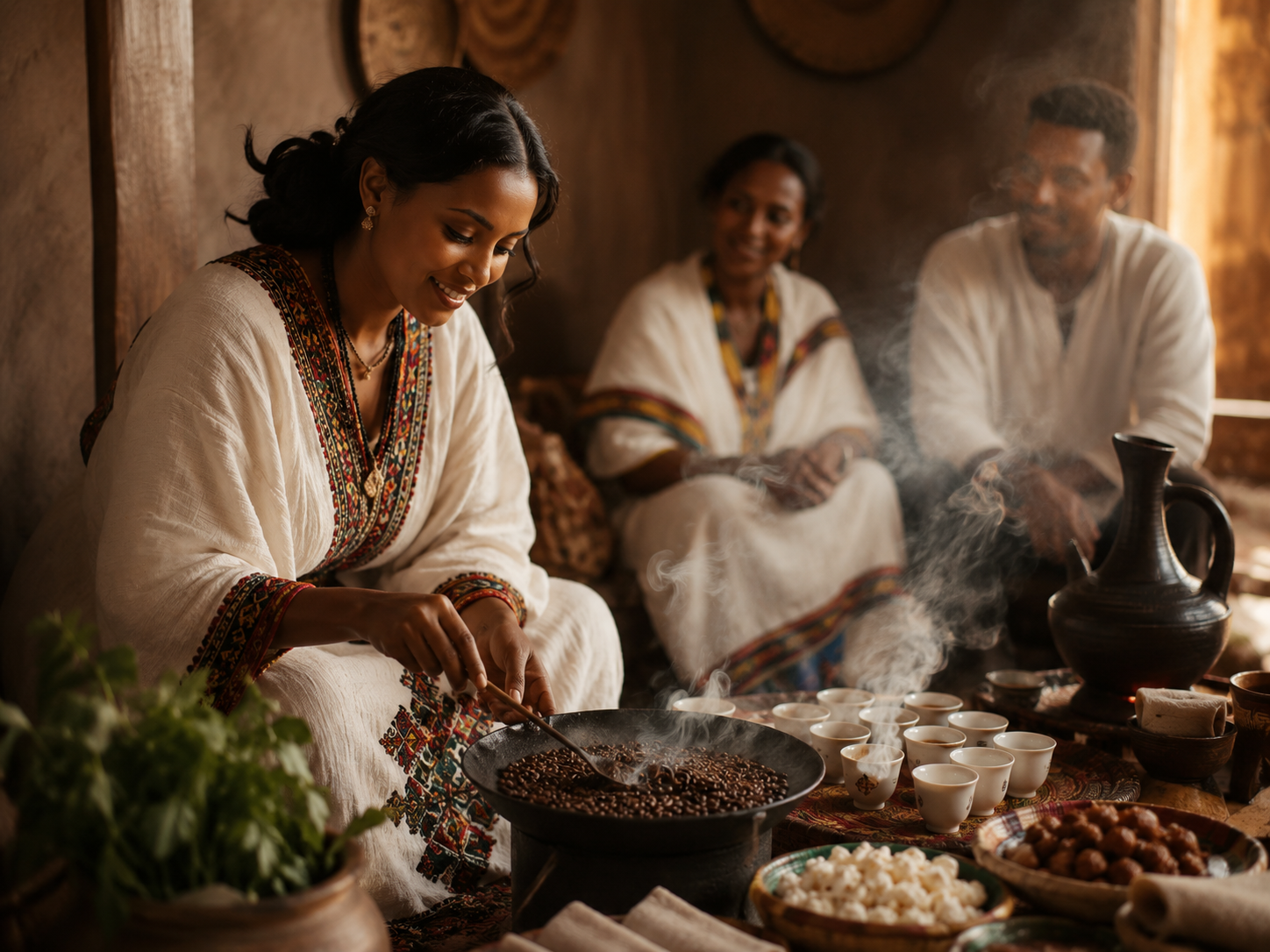
One of the best-known stories about the origin of coffee is the legend of Kaldi, a young Ethiopian goatherd. According to the tale, he noticed that his goats became unusually lively after eating red coffee cherries. They jumped, danced and seemed more awake than before.
Curious, Kaldi tried the fruit himself and shared his discovery. The details vary from region to region: in some versions monks appear, in others villagers play the central role, and in some the aroma released by roasting becomes the key moment. What matters is the meaning: a small observation became a culture of roasting, preparing and sharing.
Lango deliberately connects with this storytelling world. In the local storytelling tradition we refer to, Lango corresponds to Kaldi’s name in one of the local languages. For us, the name is therefore more than a brand name: it points back to the oral coffee tradition from which the Kaldi legend lives on. Our logo tells this story once, but clearly: the goatherd, nature, the coffee plant and the jebena connect origin, discovery and hospitality.
“Lango stands for coffee as discovery, as ritual and as an invitation to come together.”
In many Ethiopian households, coffee is part of the rhythm of the day. Beans are sorted by hand, roasted fresh, ground and prepared in front of guests. The aroma of the roasted beans is intentionally shared – not as a side note, but as the beginning of the shared moment.
Neighbours often stop by, families sit together and conversations begin. Coffee may be prepared fresh several times a day. Many girls grow up with this ceremony and learn early how roasting, serving, respect and hospitality belong together.
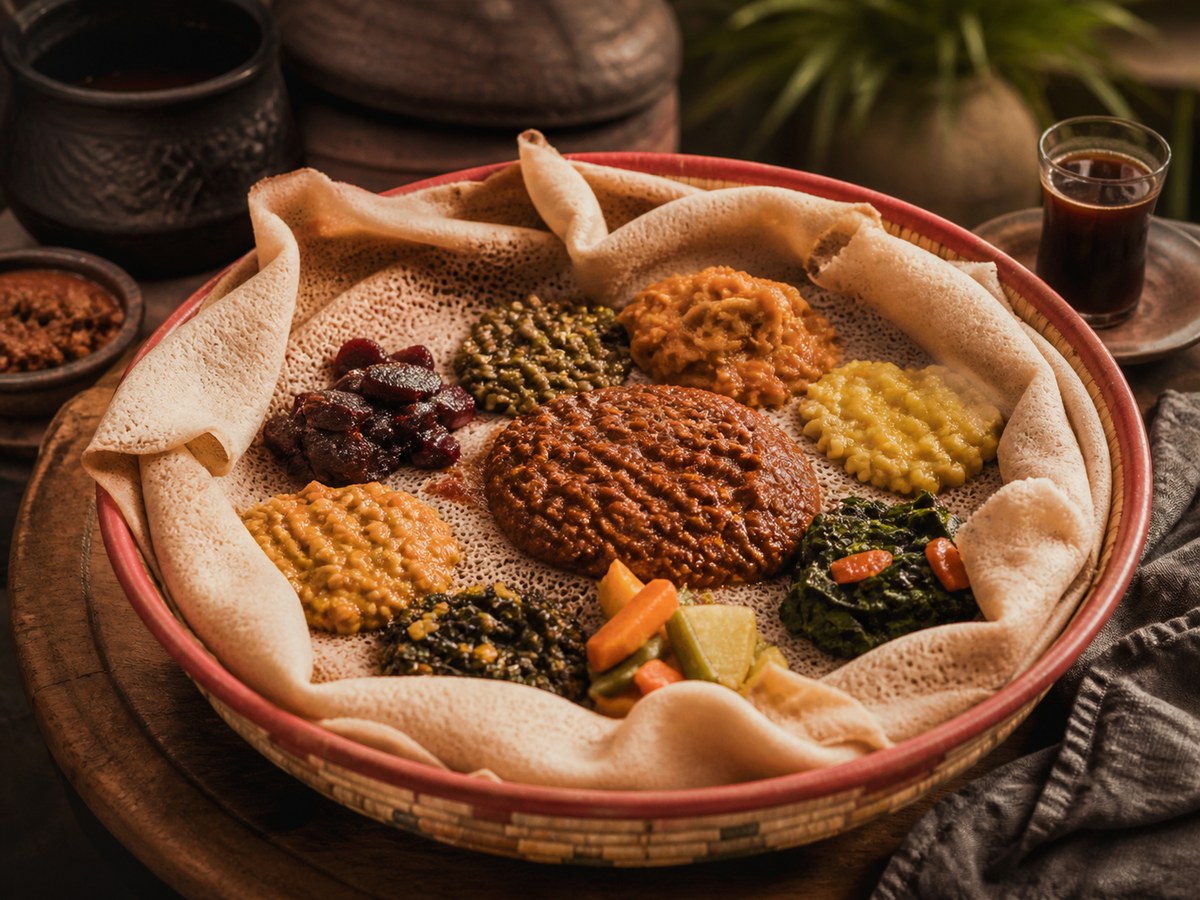
During gatherings, tastings or family moments, food may also be part of the experience – for example injera, popcorn or small snacks. Coffee is therefore not only drunk, but experienced: through hands, aroma, voice, time and community.
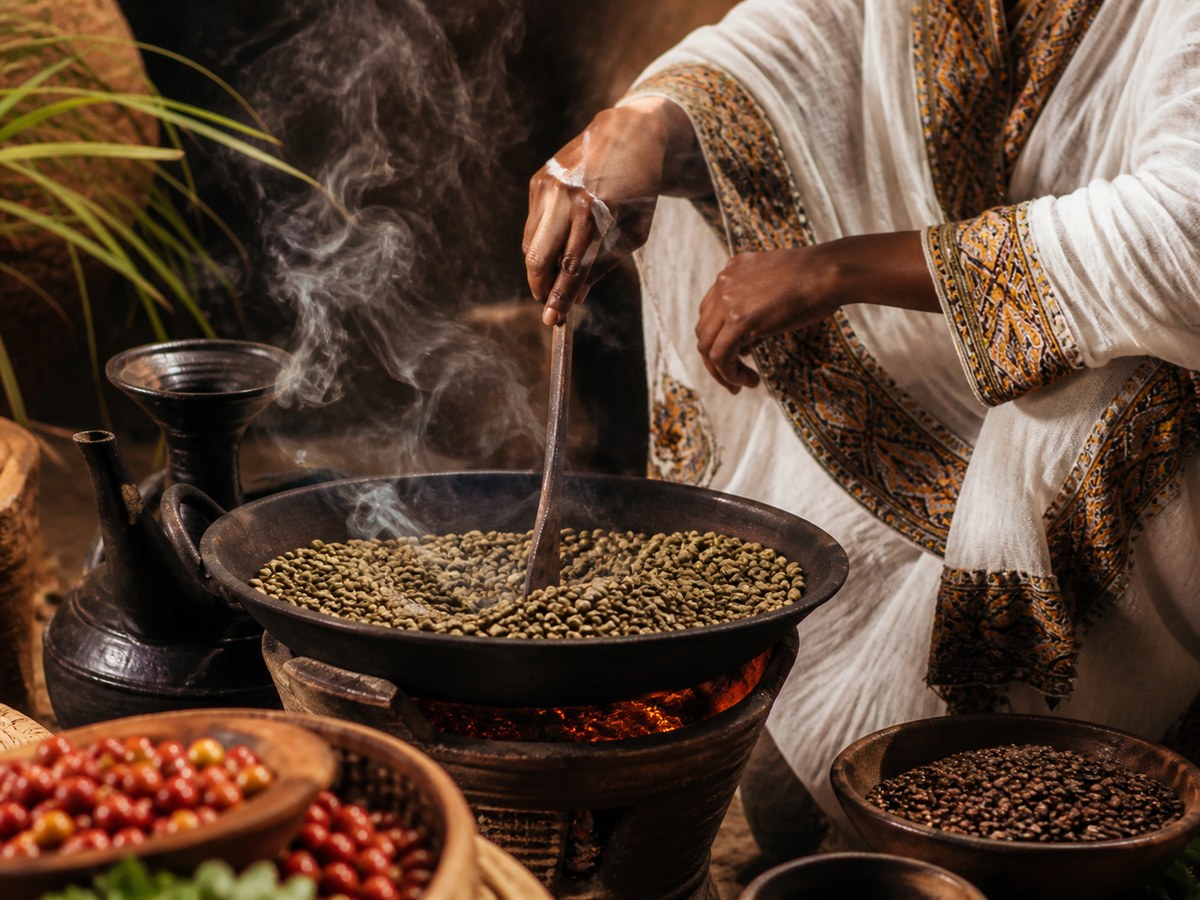
From a young age, many women learn within the family how roasting, aroma and ceremony belong together. Roasting in a flat pan is not only preparation, but visible craft: the colour of the beans, the sound, the rising aroma and the right moment all shape the character of the coffee.
Coffee is often roasted and brewed not just once, but several times a day. Roasting in the home, the fragrance filling the room and drinking together express respect, closeness and hospitality – values we want people to feel in Lango Coffee as well.
The Ethiopian coffee ceremony is not fast service, but a social ritual. It creates space for guests, conversation and closeness. Every step – from roasting to the final cup – has its place.
The place is often arranged with care, sometimes with grass or flowers on the floor. Incense creates a calm, ceremonial atmosphere.
Green beans are roasted fresh in a pan. The aroma is shared with guests – a sign of respect and the moment when the ceremony comes alive.
The roasted beans are ground and brewed in the traditional jebena. Coffee takes time; that time is exactly what gives the ritual its character.
The coffee is served in small cups. It is often accompanied by popcorn, small snacks or, at larger gatherings, foods such as injera.
Traditionally several rounds follow: Abol, the first and strongest cup; Tona, the second round; and Baraka, the blessing cup. Coffee becomes a sequence that deepens connection and honours the visit.
Ethiopia is culturally and linguistically rich. The coffee ritual may look different from region to region, yet it often carries a similar attitude: respect, time and hospitality.
We want to make this culture accessible without reducing it: through carefully selected beans, clear origin, warm design and personal encounters at coffee tastings and events.
Roasting, aroma and preparation should not remain anonymous at Lango Coffee. Every origin tells of landscape, processing, people and the moment coffee is shared.
Ethiopia offers an impressive diversity of growing areas. Altitude, microclimate, soil, varieties and processing shape every cup. That is why Ethiopian coffee does not simply taste “Ethiopian” – each region brings its own aromatic language.
The map highlights selected origin regions and connects orientation with typical flavour profiles. This makes origin visible not only on the bag, but also in taste and story.
Hover or tap a region on the map or in the profile cards to highlight the connection.
This illustration is stylised and intended for orientation. Climate, soil, altitude and processing shape each profile.
Delicate, floral and elegant – often with jasmine, bergamot and citrus notes.
Fresh, balanced and fruit-toned – often with sweet citrus hints and a clean finish.
Bold and characterful – often spicy, berry-like and slightly winey.
Full-bodied and spicy – loved for cocoa, nutty and dark-fruit notes.
Complex and soft – with wild berries, dark chocolate and floral sweetness.